
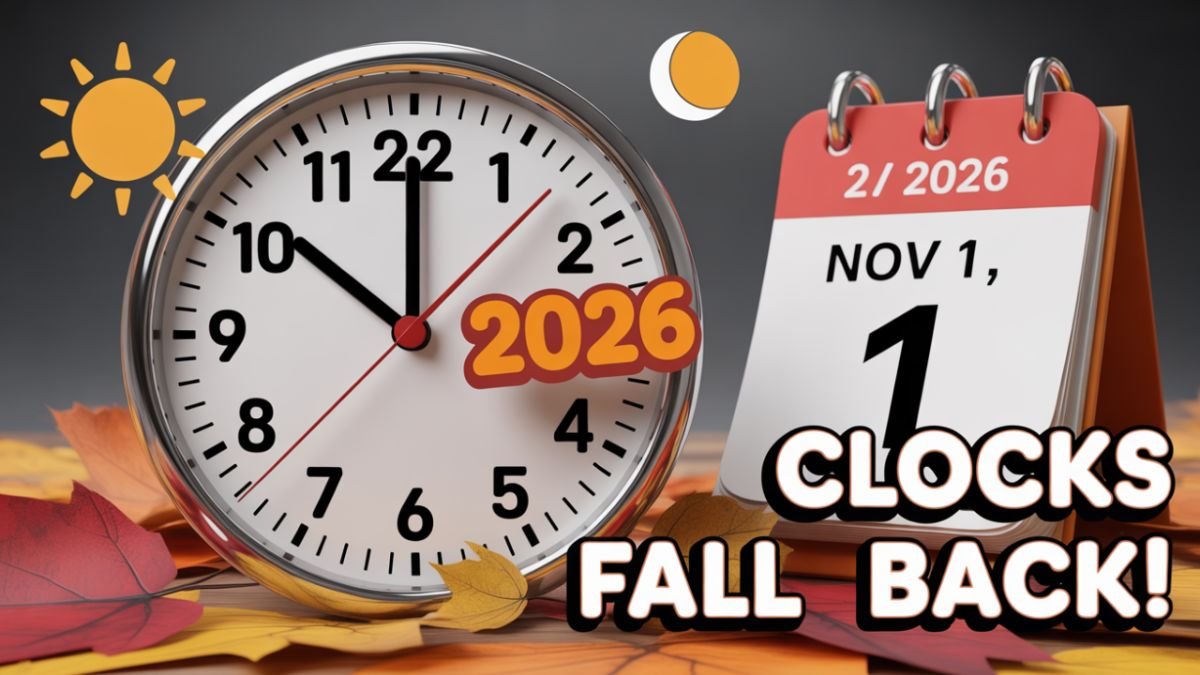
As is the case every year, Daylight Saving Time (DST) will come in the year 2026. This is the time when we turn the clocks back or forward by an hour to capture the best use of sunlight. For a lot of people, it seems to be just one of those days when people change their clocks, but there are so many intricate pointers leading into the science, health, and lifestyle of sorts. In this article, we will understand when your clocks will be set back in 2026, the history of DST, its advantages and disadvantages, and tips on how to cope with it.
What is Daylight Saving Time (DST)?
Daylight Saving Time is a practice during which the clock moves during specific months of the year. Generally, the clock is advanced forward by one hour in the summer to extend daylight into the evening and then reverted back in the winter.
The whole idea is to use daylight to the maximum so that we can conserve energy and the living people can benefit from natural daylight. Some experts assert that there are considerable health and psychological implications as well.
When will the clocks be set back in 2026?
In 2026, the last Sunday of October is usually the time when DST ends. On this day, you will set your clocks back from 2 AM to 1 AM. This means you will get an extra hour of sleep.
- If you usually wake up at 7 AM, after DST ends, your body will be adjusted to a 6 AM schedule.
- Evening daylight will end earlier, making the day feel shorter.
- This change occurs on different dates in the US, Europe, and many other countries.
Therefore, it is important to remember the correct date according to your region.
History of Daylight Saving Time
Daylight Saving Time originated in 1916 in Germany and Austria-Hungary. Its main purpose was to conserve energy during wartime. Later, Britain and other European countries also adopted it.
In the United States, Daylight Saving Time was first implemented in 1918. However, this has been changed several times over the years and is currently governed by the Energy Policy Act of 2005.
Why is DST considered important?
- Energy Saving: By maximizing the use of daylight, electricity consumption in homes and businesses is reduced.
- Health Impact: More daylight brings people out more, which translates more often to improved physical health.
- Mental Health: Light improves mood and mentality. It makes people feel more energetic and happy.
- Economic Benefits: The longer daylight hours create the conditions for extra activity in the business and tourism areas, which consequently benefits the economy.
Disadvantages and Challenges of DST
Though DST has numerous advantages, it also carries with it a number of disadvantages and health impacts:
- Change in sleep: Flipping clocks back and forward in time disrupts sleep patterns and can leave people feeling tired.
- Possible health threats: Some studies indicate that there is an increase in incidences of heart attack and stroke after the commencement of daylight saving time.
- Safety Issues: Dark mornings increase the possibilities for dangerous road traffic accidents.
- Social Inconvenience: Changing of timing creates a hassle in work, school, and other daily lives.
Tips for Adapting to DST
- Preparation: Gradually adjust your sleep and wake times a week before DST begins.
- Benefit from Natural Light: Spend time in sunlight during the day so that your body’s biological clock can adjust.
- Maintain a Healthy Routine: Maintain a regular schedule for eating, exercising, and sleeping.
- Use Digital Clocks: Smartphones and other digital devices update automatically, but don’t forget to manually change older clocks.
The Future of DST
Within the last few years, many countries have started raising questions on DST. A few members of these countries abolished the observance of DST altogether, while many other countries are still observing it.
Within the US, few states are still conversing about whether to make DST observance permanent It is believed that, theoretically, DST is bound to bring benefits in one of the three or all three areas of energy conservation, health, or social life.
Conclusion
Thus the year 2026 gives such a small yet important change in your life with Daylight Saving Time. The setting back of the clock is more than just a time change; it affects everything from your health to everyday activities and how you relate with people.
This year when you wind the clock to fall back, seize the moments these subtle changes bring along. With all the natural light before evening, how about a cute routine and front-row seating for sleep and overall well-being. Do you remember that DST is not just an adjustment of the hands of your watch but a balancing of time anyhow.