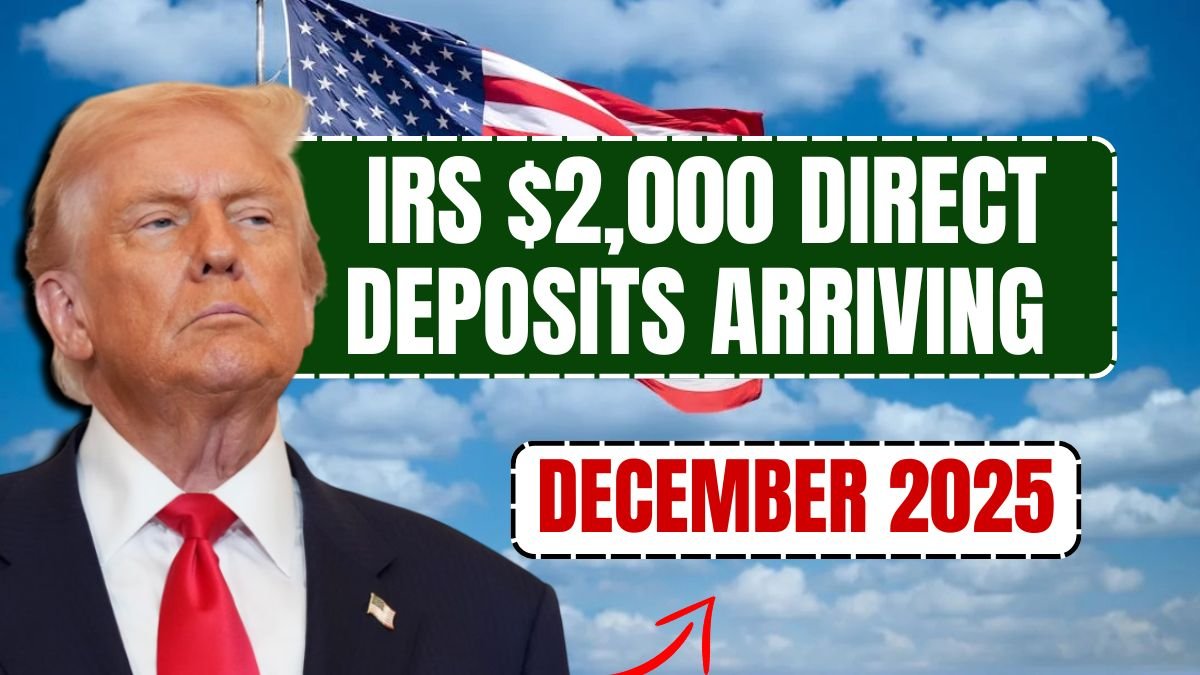
IRS Approves $2,000 Direct Deposit for December 2025 – Former President Donald Trump has made a remark that has been the center of attention during the talk of American politics and the economy. He suggested $2,000 “tariff dividend checks” for Americans to be given out in 2026. This may look like a support for average people in the face of soaring inflation, high living costs, and economic hardships which first of all draws howevy a mouth of that plan still resides in the air. Secondly, it would still need to go through a maze of political, economic, and legal obstacles before ever becoming a reality.
What is the Tariff Dividend Check Idea?
The tariff dividend check concept involves the government returning a portion of the revenue collected from tariffs imposed on foreign goods directly to citizens in the form of cash payments. Donald Trump argues that since these tariffs are imposed to protect the American economy and domestic industries, the revenue generated should also benefit the public. It is within this framework that the proposal to provide $2,000 per person checks in 2026 emerged.
Where Will the Money Come From?
The most significant issue that needs to be solved with this project is where the money for such a massive payment would come from. Trump asserts that the government would pay for it with the revenues from tariffs. Still, White House economic advisor Kevin Hassett made it clear that the money might be obtained from not just tariffs but also from other sources like taxes. It would be up to Congress to determine the allocation of this revenue.
Besides, the government is thinking that it is quite a task to distribute hundreds of billions of dollars at once even if the US deficit has reduced a little. In this respect, Scott Besant, the Treasury Secretary hinted that perhaps a small rebate for the low-income families, especially the ones with an income of less than $100,000, could be an issue opening for discussions as well.

Tariff Revenue and the Reality
Looking at the numbers, the picture appears somewhat complex. Estimates suggest that the new tariffs could generate approximately $120 billion in revenue in 2026. Over the next decade, total tariff revenue could reach around $2.1 trillion. However, paying every American $2,000 would require approximately $300 billion or even more.
This clearly means that the current tariff revenue is insufficient to provide every American with a full $2,000 payment. At best, the amount of the checks would have to be reduced, or eligibility would have to be limited.
Will the $2,000 Checks Actually Materialize?
It’s difficult to say at this point whether this plan will actually be implemented. First, it would need to be approved by Congress, where it is certain to face significant debate. Many economic experts believe that while the proposal is politically appealing, the numbers simply don’t add up in practice.
Furthermore, some experts argue that it would be more beneficial to reduce tariffs rather than distribute the revenue to the public. This would lower the prices of goods and provide indirect relief to consumers.
Economic Challenges Facing the Plan
Institutions like the Tax Foundation estimate that while Trump’s tariff policies might generate $2.1 trillion over the next 10 years, other countries could retaliate with their own tariffs, harming American exports and potentially reducing overall revenue.
Scott Lincicome, vice president of the Cato Institute, believes that giving people “their own money back” is an inefficient approach. He also argues that such large cash payments risk increasing inflation, which could limit the actual benefit to ordinary citizens.
Legal Hurdles Could Also Pose a Problem
Another major obstacle is legal. The U.S. Supreme Court has raised questions about whether the president has the legal authority to impose such broad tariffs. If the courts take a strict stance on tariffs, not only will tariff policy be affected, but any associated dividend or rebate plan could also be stalled.
Alternative Proposal: American Worker Rebate Act
Even if the $2,000 tariff dividend check doesn’t materialize, another proposal is under discussion. The “American Worker Rebate Act,” introduced by Senator Josh Hawley in 2025, proposes giving each individual $600 and a maximum of $2,400 to a family of four. While this bill has not yet passed, it is being considered as a backup option.
Conclusion: Between Hope and Reality
Overall, the idea of a $2,000 tariff dividend check in 2026 is appealing, but it remains just a proposal. Its implementation would require congressional approval, sufficient funding, economic stability, and legal clarity—all of which are uncertain. Under current circumstances, it’s premature to say that Americans will definitely receive this check.
Nevertheless, it’s clear that the government is exploring options for using tariff revenue to reduce the national debt and potentially provide relief to the public. If this plan fails, other proposals like the American Worker Rebate could offer some financial support to families in the future. The decisions of Congress and policymakers in the coming months will determine whether this idea remains a dream or becomes a reality.
FAQs
Q1. What are the $2,000 tariff dividend checks?
They are a proposed cash payment plan where Americans could receive $2,000 funded by revenue collected from tariffs.
Q2. When could the $2,000 checks be issued?
The proposal targets 2026, but no payment date is confirmed yet.
Q3. Is the $2,000 payment guaranteed?
No, the plan requires Congressional approval and is not guaranteed.
Q4. How would the checks be funded?
The funds would mainly come from tariff revenue, with possible support from other tax sources.
Q5. Are there alternative rebate plans if this fails?
Yes, the American Worker Rebate Act proposes payments of $600 per person or up to $2,400 per family.